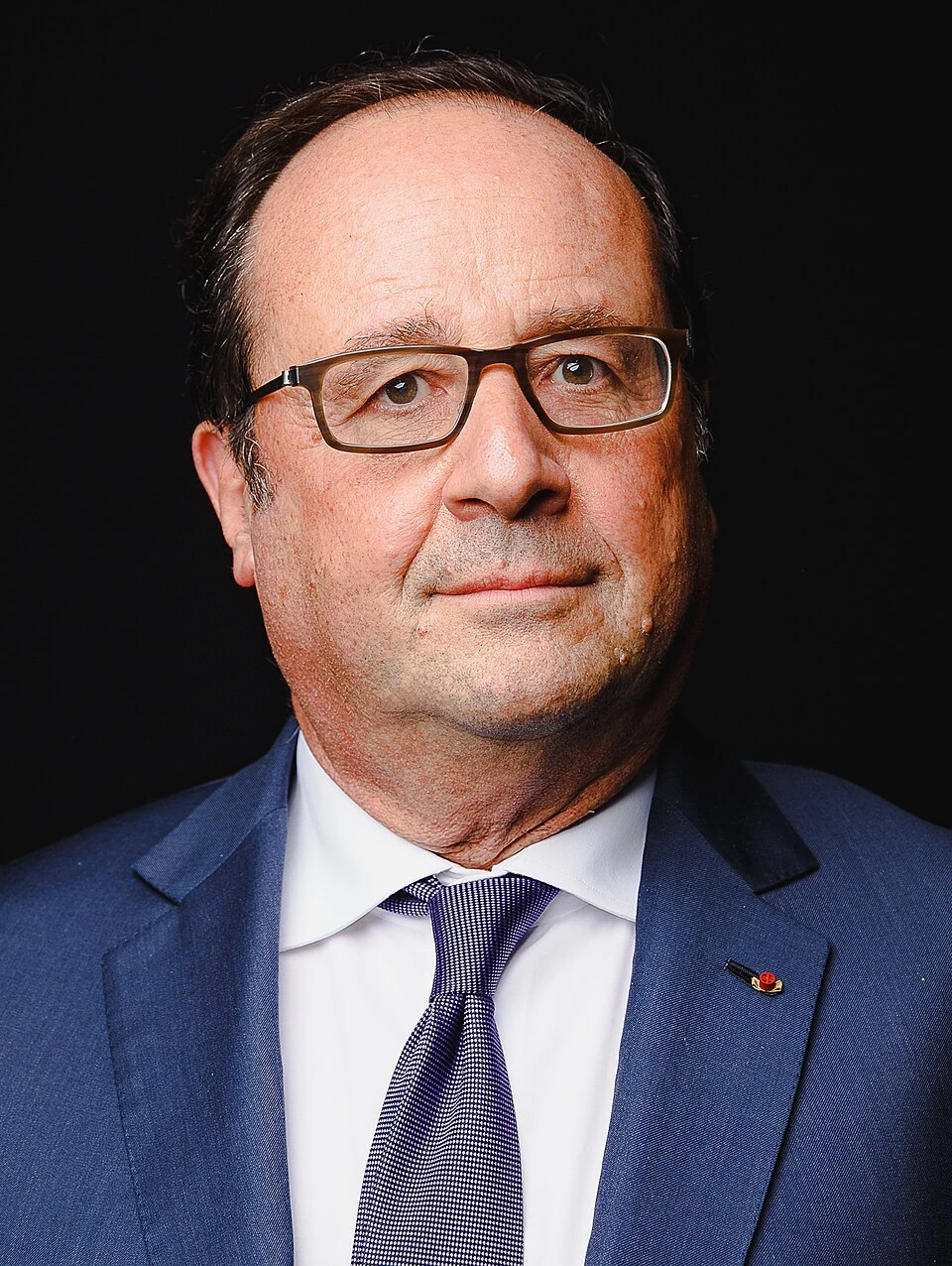
The most credible estimate for François Hollande's net worth today sits in the range of approximately €1 million to €4 million. That range is modeled from publicly available information: his declared assets at the end of his presidential mandate, his post-presidency income sources, and standard assumptions about what a former French head of state accumulates over a career in public life. There is no precise, independently audited number, and anyone claiming otherwise is guessing. What we can do is anchor the estimate to real evidence and be transparent about where assumptions fill the gaps.
François Hollande Net Worth Estimate: Assets, Income, Limits

Julien Mercier
22 May 2026
What 'net worth' actually means for François Hollande

Net worth, for any individual, is simply total assets minus total liabilities. That means adding up everything of value someone owns (real estate, savings accounts, investments, vehicles, business stakes, intellectual property) and subtracting what they owe (mortgages, loans, any outstanding debts). The result is the financial snapshot at a given moment. For a private individual like Hollande today, that snapshot is never fully visible from the outside. He is not required to publish ongoing financial disclosures the way he was as president. So what we are really working with is a modeled estimate built from the last reliable public anchor point and reasonable projections forward from there.
It is worth being direct about the limitations here. Hollande spent most of his adult life in public service rather than building a business empire. His wealth profile looks very different from a tech entrepreneur or a professional athlete. That matters because it shapes the asset categories most relevant to his net worth, and it is why the numbers you will find cited across various websites tend to be moderate by the standards of globally wealthy figures.
What we can actually verify: income and public financial indicators
The most concrete public data point we have is Hollande's end-of-mandate asset declaration. Under French transparency law, the Haute Autorité pour la Transparence de la Vie Publique (HATVP) oversees the collection and publication of senior officials' asset declarations. Hollande's declaration de patrimoine was published in the Journal Officiel on 16 June 2017, accessible via Légifrance (the official French legal database). That declaration covers the assets and liabilities he held at the close of his presidency, making it the single most reliable snapshot of his financial position from a documented, official source.
Beyond that declaration, we can identify several income and asset categories that are publicly supported for a former French president:
- Presidential pension: Former French presidents receive a lifetime pension equivalent to the salary of a senior civil servant (a Conseiller d'État), which as of recent years amounts to roughly €6,000 to €7,000 net per month. This is a verifiable entitlement under French law.
- Operational allowance and support: Former presidents are entitled to office space, staff support, and a security detail funded by the state. These are benefits in kind rather than cash income, so they do not directly add to net worth, but they reduce living expenses significantly.
- Book and media income: Hollande has authored books and participated in paid speaking engagements and media appearances since leaving office in May 2017. Specific fees are not publicly disclosed, but this category is a credible income source for prominent former politicians.
- Real estate: His declared patrimony at end-of-mandate included real estate holdings. Property values in France have generally appreciated since 2017, which would affect the current asset side of any estimate.
- Political role income: Hollande was elected to the French National Assembly representing Corrèze in 2022, adding a parliamentary salary (député salary is approximately €7,400 gross per month under current scales) to his income profile.
What we cannot verify includes private savings account balances, investment portfolios, any equity stakes, or liabilities that were not captured in the 2017 declaration or have changed since. This is a key limitation, and it means our estimate has genuine uncertainty on both ends of the range.
How this kind of net-worth estimate is built

The methodology for estimating net worth for a figure like Hollande follows the same basic logic used by financial researchers and reputable reference sites. Start with the most recent verified anchor (the 2017 HATVP declaration), then model forward using known income streams, reasonable savings assumptions, and public information about asset categories. blank" rel="noopener noreferrer">Forbes describes its own estimates as deliberately conservative and as calculated models rather than precise accounting values. blank" rel="noopener noreferrer">Celebrity Net Worth uses the same assets-minus-liabilities framework. No third-party site has access to private banking records, so all of these are estimates by design.
Here is the rough calculation logic applied to Hollande's situation:
- Start with the declared patrimony from the June 2017 JORF publication as the baseline asset figure.
- Apply reasonable French real estate appreciation rates (roughly 2 to 4 percent annually in most French regions since 2017) to any declared property holdings.
- Add estimated accumulated income from the presidential pension over the years since leaving office, net of living expenses, at a conservative savings rate.
- Add an estimated contribution from book royalties, speaking fees, and parliamentary salary (post-2022), again net of taxes and expenses.
- Apply no significant upward adjustments for business equity or investments unless credible sourcing supports them, keeping the estimate conservative.
- Produce a range rather than a single figure to reflect the inherent uncertainty in steps 2 through 5.
This approach is transparent about what it is: a structured estimate, not an audit. The range it produces (roughly €1 million to €4 million) reflects genuine uncertainty. The low end assumes modest savings and potential liabilities not publicly visible. The high end assumes real estate appreciation, meaningful earnings from post-presidential activities, and effective wealth preservation over nearly a decade since leaving office.
The estimated range and what actually drives the number
Putting specific components against the range helps clarify where the uncertainty lives:
| Asset or income category | Estimated contribution | Confidence level |
|---|---|---|
| Real estate (declared 2017, adjusted for appreciation) | €500,000 – €1,500,000 | Moderate (based on 2017 declaration + market data) |
| Savings and liquid assets | €200,000 – €800,000 | Low (private, not publicly visible after 2017) |
| Accumulated pension income (net, post-2017) | €300,000 – €500,000 | Moderate-high (pension rate is publicly known) |
| Book royalties, speaking fees, media income | €100,000 – €500,000 | Low (fees not disclosed) |
| Parliamentary salary income (post-2022, net savings) | €50,000 – €200,000 | Moderate (salary scale is public) |
| Liabilities (mortgages, loans) | Unknown, could reduce total by €100,000–€500,000 | Low |
The single biggest driver of uncertainty is what happened to savings and investments between 2017 and today. If Hollande maintained significant liquid assets from his declared patrimony and managed them well, the upper end of the range becomes plausible. If living costs, potential legal expenses, or undisclosed liabilities have run high, the figure could sit closer to the lower end. Neither scenario is provable from the outside.
Why different sources quote different numbers
If you search 'François Hollande net worth' or 'Francois Hollande net worth' across a few websites, you will encounter figures ranging from under €1 million to upwards of €5 million or even higher. Because of how these models differ, the same François Hollande net worth search can still yield different du président net worth figures from different outlets. The variation comes from several factors, none of which reflect secret inside knowledge.
- Different base data: Some sites rely on older estimates that predate the 2017 HATVP declaration, using career income extrapolations rather than documented figures. Others anchor to the declaration but apply different appreciation assumptions.
- Currency and conversion timing: Hollande's wealth is in euros, but some English-language sites convert to USD or GBP at different exchange rate snapshots, producing apparent discrepancies even when the underlying euro figure is similar.
- Methodology transparency: Sites that do not explain their methodology may be combining unverifiable figures from secondary sources, creating circular citation problems where one estimate is copied and slightly modified across multiple sites.
- Update frequency: A figure published in 2019 and not updated since will be outdated. Income streams like the parliamentary salary (which began after his 2022 election) would not appear in older estimates.
- Definitional differences: Some estimates include the value of state benefits in kind (staff, security, office) as a form of wealth, which inflates the number relative to strict asset-minus-liability calculations.
The practical takeaway is to treat any single figure from any single site with skepticism. Reputable sites produce ranges and explain their sourcing. Sites that produce a suspiciously precise number with no methodology note are almost certainly working from an unverified secondary source.
It is also worth noting that wealth estimation for former heads of state varies considerably depending on the country and its transparency norms. Figures like former French presidents operate in a system with relatively strong asset declaration requirements, which gives researchers a better baseline than many other countries. For context, former leaders in less transparent systems can have wealth figures that are almost entirely unanchored to public data, making confidence levels much lower. The quality of French public disclosure mechanisms, while not perfect, is a genuine advantage for anyone researching this topic.
How to check for updates and sharpen your own confidence

If you want to go beyond any site's estimate and build your own confidence in the figure, here are the most useful sources to consult directly:
- HATVP (hatvp.fr): The HATVP publishes asset declarations for current and former senior officials. Check their search interface for any additional declarations submitted by Hollande, particularly if he has held other declarable roles after his presidential mandate.
- Légifrance (legifrance.gouv.fr): The Journal Officiel archives are fully searchable. The June 16, 2017 issue (JORF n° 0140) contains Hollande's end-of-mandate declaration. This is the primary source document.
- Assemblée Nationale (assemblee-nationale.fr): Since Hollande became a député in 2022, the National Assembly publishes salary and allowance structures for members. This lets you calculate a reasonable income figure for that period.
- French media archives (Le Monde, Le Figaro, Libération): Major French newspapers have covered his post-presidential activities including book releases and speaking engagements. These provide qualitative evidence of income categories even without precise fee figures.
- French property market databases (Meilleurs Agents, DVF via data.gouv.fr): If you can identify property linked to Hollande from the 2017 declaration, French land registry data (the DVF dataset) gives actual transaction prices for comparable properties in the same area.
- Periodic HATVP news releases: The HATVP occasionally publishes reports on the transparency system more broadly, and any resubmitted or corrected declarations would appear there.
One practical point: the 2017 declaration is the floor of your research. Everything after that is inference. If you find a credible report of a significant asset sale, a large book advance, or new property acquisition, update the model accordingly. Net worth is a living number, not a permanent label, and the goal is to stay as close to documented evidence as the available public record allows.
The bottom line is that François Hollande's net worth is most credibly estimated in the €1 million to €4 million range as of 2026, anchored to his 2017 official declaration and modeled forward with known income sources. This same approach can also be used to evaluate the Haitian president net worth claims you may see online, by checking what is publicly documented and what is modeled. It is not a flashy number by global standards, and that reflects his career path accurately. The estimate is honest about its limits, and those limits are the right thing to communicate when private finances are involved. You can also find similar modeling discussions under Pierre Nkurunziza net worth, but the same transparency limits apply when official disclosures are incomplete.
FAQ
Why do some sites show François Hollande net worth below €1 million or above €5 million?
Most of the divergence comes from different assumptions about what you should carry forward from the 2017 asset declaration (for example, cash savings vs. investments, and whether assets appreciated). Sites that publish a single precise number without explaining their carry-forward assumptions are usually relying on thin or secondary inputs, not updated asset-level evidence.
How can I sanity-check whether a “net worth” estimate is using the right starting point?
Look for whether the estimate explicitly anchors to the end-of-mandate declaration and then models forward. A credible approach usually describes which asset categories are included (real estate, deposits, investments) and which are excluded or unknown (private account balances, unseen liabilities). If the article cannot show its anchor or its adjustment logic, treat the number as low confidence.
Does “net worth” for a former president include pensions and book income in the same way as assets?
Net worth is a balance sheet measure (assets minus liabilities), pensions and royalties show up indirectly if they are converted into holdings that increase assets or reduce debts. An estimate that inflates future earnings without explaining how they translate into asset accumulation is effectively mixing income projection with net worth.
What would most likely move the estimate toward the lower end of the €1 million to €4 million range?
Large outflows not visible in the 2017 declaration, such as major legal expenses, settling undisclosed debts, or a reduction in liquid holdings used for living costs, would push the figure down. Another downward driver is if the model assumes limited or no investment growth after 2017.
What would most likely move the estimate toward the upper end?
Meaningful asset appreciation (especially for any property held), sustained investment returns on remaining savings, and additional income that is reflected in accumulating holdings would push it upward. The key is evidence of changes since 2017, like documented property acquisition or large, verifiable payouts.
Are exchange rates a real issue when converting Hollande’s declared assets to euros?
Usually, the impact is modest because the declaration is tied to the French system and commonly reported figures in euros. Bigger effects appear only if an estimate converts foreign-currency assets or assumes offshore holdings that are not directly documented in the anchor disclosure.
Can I treat the €1 million to €4 million range as “the true number”?
No. It is a modeled interval, not an audited accounting figure. The range narrows only when you have credible updates after 2017 (for example, verified new asset purchases or sales). Without that, the uncertainty around savings and investment balances remains the main limitation.
How often should a net worth model for Hollande be updated?
Update when you have a verifiable new anchor event, such as a major property transaction with documentation, a confirmed large book contract with public confirmation, or a credible report of significant asset disposition. Otherwise, the estimate may be updated too frequently based on speculation, which can widen the noise rather than improve accuracy.
What common mistake should I avoid when comparing “net worth” estimates across countries?
Assuming the same transparency level. France’s asset declaration system provides a better baseline, but other countries may not offer comparable documentation. Direct comparisons can be misleading because the underlying data quality differs.
If I want to build my own estimate, what simple checklist should I use?
Use the 2017 declaration as the baseline, list liabilities explicitly (mortgages and loans), then add only changes that have evidence since 2017. For anything unknown, keep it in a structured uncertainty buffer rather than plugging a single guessed figure into a precise total.
Do “gross assets” estimates tell you anything useful if they do not subtract liabilities?
Yes, but they can mislead. Gross assets may look similar across models while net worth diverges because of different assumed debts, mortgage balances, or legal liabilities. Always prioritize assets-minus-liabilities calculations or at least check whether liabilities are included.
Next Article
Haitian President Net Worth: How to Estimate Credibly
Learn how to estimate Haitian president net worth with credible sources, valuation methods, uncertainty ranges, and sani