
Based on publicly available business proxies and credible industry data, Cédric Grolet's net worth is reasonably estimated at between €5 million and €15 million as of early 2026. That wide range reflects genuine uncertainty about his private equity stakes, licensing income, and undisclosed business arrangements, not sloppy research. The floor is anchored in what we can verify: multi-location retail revenue, premium pricing, and confirmed brand partnerships. The ceiling accounts for compounding income streams if his equity in the broader Grolet brand operation is substantial. Here is exactly how we get to those numbers.
Cedric Grolet Net Worth: Estimated Range and How It’s Calculated

Julien Mercier
27 Mar 2026

Who Cédric Grolet is, and why his wealth is estimated rather than confirmed

Cédric Grolet is a French pastry chef who built a reputation as one of the most influential dessert-makers working today. He became Head Pastry Chef at Le Meurice, the Dorchester Collection luxury hotel in Paris, in 2012, a role he still holds. His work, particularly his hyper-realistic fruit-shaped trompe-l'oeil desserts and sculptural cakes, became globally viral on social media and turned him into a brand as much as a craftsman.
Why is his wealth estimated rather than published? Because Grolet is not a public company. He does not file consolidated accounts that are publicly searchable, and France's wealth disclosure rules apply only to elected officials. His employer, the Dorchester Collection, is privately held. His boutiques operate under brand partnerships and hospitality agreements whose financial terms are not public. So any net worth figure you read, including this one, is a structured estimate based on revenue proxies, pricing data, and comparable business valuations, not audited accounts.
The estimated net worth range and what drives it
The €5M–€15M range rests on three main pillars: retail boutique revenue across multiple locations, brand licensing and partnership income, and media or publishing royalties. These are not equal contributors, which is part of why the range is so wide.
Retail footprint
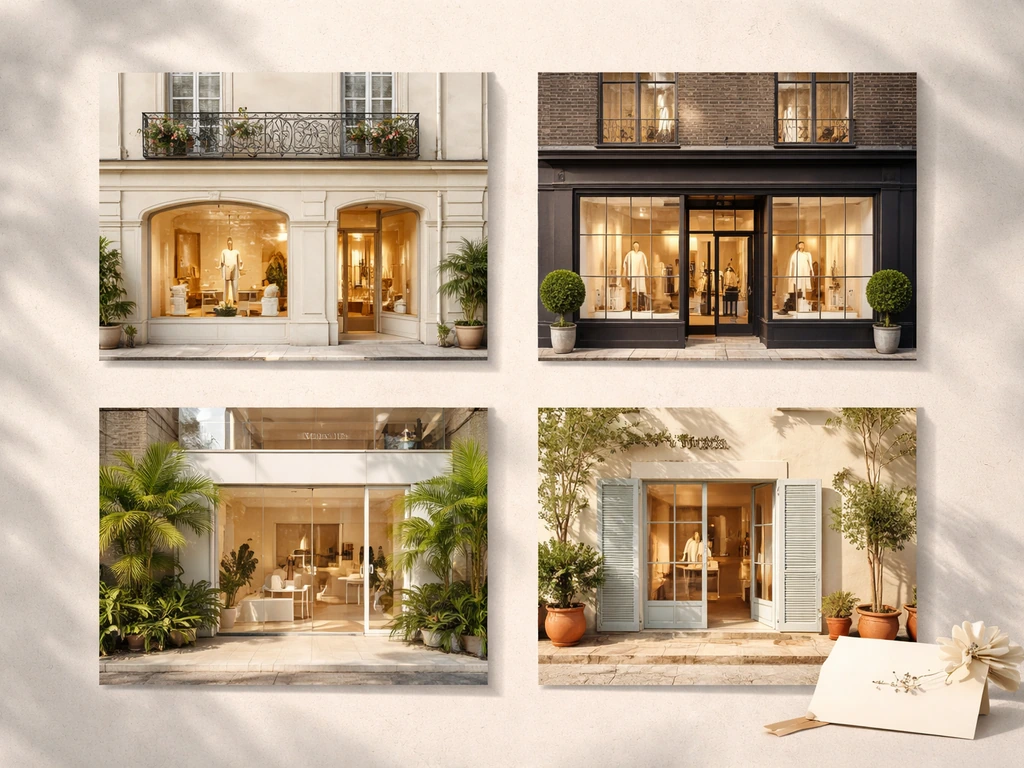
By early 2026, the Cédric Grolet brand operates boutiques in Paris (the Opéra and Le Meurice locations), London, Singapore, Saint-Tropez (opened 2024 in partnership with the luxury hospitality group Airelles, at 19 rue des Feniers), and a Monaco outpost inside Hôtel de Paris Monte-Carlo announced for summer 2025. Each location sells pastries priced at €8–€20 per piece on average, which is typical for ultra-premium Parisian pâtisserie. A single-location boutique in a high-traffic luxury address can realistically turn over €1.5M–€3M per year in retail sales. With five to six locations, gross retail revenue across the network could plausibly reach €8M–€15M annually before costs.
Brand partnerships and licensing
The Saint-Tropez boutique is structured as a co-branded concept (Cédric Grolet & Airelles), which suggests a licensing or revenue-share model rather than direct ownership. Similar arrangements likely govern Singapore and possibly London. In these models, the chef's brand is licensed to a hospitality partner who bears the capital and operational cost, while the chef receives a royalty or management fee, typically 5–15% of revenue in fine dining and luxury hospitality licensing deals. That income is high-margin because overhead sits with the partner. If even three of his locations are structured this way, royalty income alone could contribute €300K–€1.5M per year to his personal income.
Media, books, and digital presence

Grolet has published pastry books that sell internationally and generate both royalties and licensing fees for translated editions. His Instagram following, which sits in the millions, has commercial value for brand endorsements, though he has remained selective about partnerships relative to his reach. If you are specifically looking for Rémi Gaillard net worth, use the same proxy approach and compare it against verified career and income milestones rather than taking a single figure at face value. These streams are real but secondary, contributing meaningful five- to low-six-figure annual income rather than driving the top-line estimate.
How net worth estimates are calculated for public figures like this
Wealth estimation for private individuals follows a standard methodology even when exact data is unavailable. The process works like this: identify all known income streams, apply industry-standard revenue multiples or margin assumptions to estimate annual earnings, then apply a reasonable savings and investment rate over the career timeline to arrive at accumulated net worth. Assets are then adjusted for taxes (France's top marginal income tax rate is 45%, with social charges pushing effective rates higher), known liabilities, and lifestyle costs.
For Grolet specifically, we use retail foot-traffic benchmarks from comparable Paris pâtisseries (Pierre Hermé, Ladurée), published pricing from his own menus and boutique displays, hospitality licensing norms, and the career span since 2012. We do not have access to his personal balance sheet, equity agreements with partners, or property holdings, which is why the range is intentionally wide.
Two important limits: first, net worth is a point-in-time snapshot that includes assets minus liabilities, it is not annual income. A chef earning €1M per year is not automatically worth €10M after ten years, because taxes, business reinvestment, and personal spending absorb a significant share. Second, brand equity is only an asset if it can be sold or monetized, and for a personality-driven brand, valuing that equity is speculative. We deliberately exclude brand equity from the floor estimate and only partially include it in the ceiling.
Breaking down where the money actually comes from
Understanding the income breakdown helps you evaluate whether a claimed net worth is plausible. For Grolet, the income sources stack as follows, roughly in order of contribution:
- Boutique retail sales: the highest gross revenue but also the highest cost, given prime real estate, staff, and ingredient expenses in luxury locations. Margins in premium pâtisserie typically run 15–30% net.
- Brand licensing and royalty fees: high-margin income from hospitality partners operating co-branded boutiques in locations like Saint-Tropez and potentially elsewhere.
- Base salary and bonuses as Head Pastry Chef at Le Meurice: a Michelin-starred luxury hotel at the Dorchester Collection pays its executive pastry chef a senior executive salary, likely €150K–€300K annually plus performance bonuses.
- Book royalties and international licensing of publications: meaningful but not a primary wealth driver.
- Corporate endorsements and product collaborations: selective partnerships with luxury food, kitchenware, or hospitality brands. These are typically structured as flat fees or per-project payments.
- Masterclasses and professional training events: Grolet runs paid professional training sessions that attract pastry chefs from around the world, commanding premium pricing per participant.
The combination of a salaried anchor (Le Meurice), retail ownership or equity, and licensing income creates a diversified personal income structure that is more resilient than a single-restaurant operation. This is similar to other high-profile French figures in adjacent creative industries, such as Cédric Charbit, whose wealth is likewise driven by a combination of institutional salary and brand equity.
Career timeline and the financial inflection points
The career arc matters because net worth accumulates non-linearly. The periods when Grolet's earning power jumped sharply are identifiable, and they explain why most of his estimated wealth is relatively recent.
| Year / Period | Event | Financial Impact |
|---|---|---|
| 2012 | Appointed Head Pastry Chef at Le Meurice | Stable senior salary; reputation platform established |
| 2015–2017 | Viral social media growth; international awards including World's Best Pastry Chef (Les Grandes Tables du Monde) | Dramatic increase in brand value; speaking fees, book deals, endorsement inquiries |
| 2018 | First standalone boutique opens inside Le Meurice (Fruits universe, 6 rue de Castiglione, Paris) | First direct retail revenue; proof of concept for the boutique model |
| 2019–2020 | Opéra boutique opens; continued media exposure including TV appearances | Second retail location; broader Paris consumer base; increased licensing interest |
| 2021–2023 | London and Singapore expansions | International brand licensing revenue; cross-border royalty income begins |
| 2024 | Saint-Tropez boutique (Cédric Grolet & Airelles) opens | New co-branded hospitality partnership model; seasonal high-value location |
| 2025 | Monaco boutique announced (Hôtel de Paris Monte-Carlo) | Further hospitality-tier licensing; Monte-Carlo clientele is among highest spending in Europe |
The financial inflection point was clearly 2018. The World’s 50 Best blog also credits Cédric Grolet with receiving the “World’s Best Pastry Chef” award for 2018. Before the first boutique, Grolet's personal income was primarily salary-based. After it, he began building equity in a retail brand that compounds independently of his daily labor. By 2024, with four to five active locations and a sixth in development, the passive and semi-passive income streams became substantial enough to materially affect net worth accumulation speed.
How to verify the numbers yourself
If you want to cross-check this estimate, here is exactly what to look for and where.
Public records and business filings
Search the French business registry (Registre du Commerce et des Sociétés, accessible via Infogreffe or Pappers.fr) for any legal entities associated with "Grolet" or the boutique brand names. French SARL and SAS filings include annual revenue and basic financial data that must be disclosed. If a company connected to Grolet has filed accounts, this is your most reliable data point. UK Companies House performs the same function for any London-registered entity.
Industry benchmarks
Cross-reference boutique pastry revenue against published data from French industry associations (Confédération Nationale de la Boulangerie-Pâtisserie) and luxury food sector reports from analysts like Xerfi or NPD Group France. If a claimed revenue figure sits far outside the range for a comparable-size premium pâtisserie, treat it skeptically.
Red flags in low-quality sources
- Net worth figures presented as exact numbers (e.g., "€8,340,000") without any sourcing methodology — private wealth cannot be known to that precision.
- Claims that conflate annual income with net worth. A chef "earning millions per year" is not the same as being worth tens of millions.
- Figures that have not been updated in two or more years but are presented as current.
- Sources that list a net worth for Grolet but cannot identify his specific business entities, locations, or income streams.
- Articles that cite other celebrity net worth sites as their primary source rather than primary business or financial records.
Currency and time-period adjustments
Some older sources will quote net worth figures in US dollars based on EUR/USD exchange rates that may be two to four years out of date. Always check when the estimate was published and what exchange rate was used. As of early 2026, €1 is approximately $1.08–$1.10, but that ratio has shifted meaningfully over the past three years. A figure quoted as "$10 million" in 2022 may have been €9.3M at the time and represents a meaningfully different number if recalculated today.
Where Grolet fits in the broader French wealth landscape
A €5M–€15M estimated range puts Grolet comfortably in the upper tier of French culinary professionals but well below the multi-hundred-million territory occupied by industrial food entrepreneurs or luxury conglomerate executives. For comparison, prominent French figures in adjacent creative and business fields tend to cluster in different wealth bands depending on whether their income is primarily labor-based (high-end chefs, artists) or capital-based (brand founders, investors). Grolet's trajectory is interesting precisely because he is transitioning from a purely labor-based model toward a capital-based one through brand licensing and multi-location retail, a shift that can dramatically accelerate net worth if the boutique network continues to scale. This kind of brand-driven wealth accumulation is increasingly common among French creative figures, including people like Clément Giraudet, who sits at the intersection of hospitality and brand value.
The honest bottom line: Cédric Grolet is not a billionaire, not a centimillionaire, and probably not yet at €20M. But he is building toward a genuinely multi-stream business that could push his net worth significantly higher through his 40s if expansion continues at pace and licensing deals are structured in his favor. If you're also curious about how that compares to other French business leaders, the bernard charlès net worth is often discussed in a similar wealth-analysis context.
remi dassault net worth bernard charlès net worth. If you want another example of how net worth estimates are commonly compared across very different public figures, see rémi gaillard net worth. The next verifiable milestone to watch is the financial performance of the Monaco and Saint-Tropez boutiques, since hospitality-tier locations in those markets carry some of the highest per-customer spending in Europe.
FAQ
How can I tell if the €5M–€15M estimate is leaning too low or too high?
Look at whether multiple boutiques are structured as equity-owned versus co-branded licensing. If you find entities where Grolet-linked companies show consistent profits after rent and staff costs, that supports the higher end. If most locations appear to be partnership-run with only royalty or management fees flowing to Grolet-linked entities, the lower end becomes more likely.
Does Grolet’s salary from Le Meurice fully explain the net worth range?
Not by itself. The range assumes retail and brand monetization in addition to a high-end salaried role. Even top Paris chef compensation typically cannot justify a multi-million net worth without capital-linked earnings (boutique ownership/equity and licensing/royalties).
Why do net worth estimates for private chefs swing so widely year to year?
Because the biggest drivers are not the chef’s visible income, they are the ownership stake size and the economics of licensing agreements. Small differences in royalty percentage (for example 5% versus 15%), plus whether partners cover marketing and staffing, can change annual personal cash flow enough to move a multi-year net worth estimate materially.
What’s the easiest cross-check I can do without advanced accounting knowledge?
Check whether any Grolet-associated French entities (or boutique brand entities) file accounts with disclosed revenue and results. Then compare their disclosed figures to the storefront count and pricing, using a sanity range of typical gross margins for premium pâtisserie. That quickly reveals whether the estimate’s implied margins are realistic.
How should I adjust if an older article quotes his net worth in USD?
Recalculate using the exchange rate at the time of the original claim, not the current rate. Also verify whether the source used an updated wealth year, because some sites publish estimates that were converted later without revising the underlying business assumptions.
Do brand royalties count toward net worth the same way as cash income?
They affect net worth indirectly. Royalties create cash flow, but net worth depends on what portion is saved after taxes and expenses, plus any reinvestment. If royalties are used to fund expansion or high lifestyle costs, the net worth impact may be smaller than the headline income suggests.
Could Grolet own property in France, and would that change the estimate a lot?
It could, but you should treat property as a secondary, hard-to-verify variable for a private individual. Unless you find credible signals via filings (for example equity investment vehicles) or consistent disclosed business assets, it is safer to keep property as an uncertainty factor rather than assuming it is large enough to push him above the top of the range.
What mistakes should I avoid when interpreting boutique revenue numbers?
Don’t equate gross store sales with his personal earnings. For co-branded locations, partners often cover overhead and capture operating margins, while Grolet-linked income may be only a royalty or fee. Also, sales growth does not automatically translate to profit if labor, rent, and marketing rise faster than turnover.
Is it possible he is worth less than €5M even if boutiques are popular?
Yes, if many locations are partnership-run with limited equity participation, and if licensing terms allocate most value to the hospitality partner. Another downside scenario is heavy taxation plus reinvestment that keeps personal savings low relative to gross revenue.
What milestone would most likely confirm the estimate’s direction?
The financial performance and structure of the Monaco and Saint-Tropez boutiques. If filings or credible industry reports show strong profitability at those locations and evidence of a larger equity or profit-share component flowing to Grolet-linked entities, that supports moving toward the upper end.
Next Article
Clement Giraudet Net Worth: Estimate, Sources, and Method
Méthode transparente pour estimer le net worth de Clément Giraudet, avec sources vérifiables, fourchette et limites.