The most defensible estimate of Henri Nestlé's personal wealth anchors to a single documented event: the 1875 sale of his company and factory in Vevey for one million francs. That figure, recorded in Nestlé's own corporate biography and corroborated by multiple historical sources, is the closest thing to a real balance-sheet number we have. Adjusted for inflation and currency conversion, one million Swiss francs in 1875 translates to somewhere in the range of $5 million to $15 million in 2026 US dollars depending on the conversion framework you use, which is why you'll see wildly different numbers across websites. Any estimate above that range, especially the $8.88 billion figure circulating on some aggregator sites, almost certainly conflates Henri's personal wealth with the modern Nestlé company's market capitalization, which has nothing to do with what Henri personally owned when he died in 1890.
Henri Nestlé Net Worth Estimate: Range, Sources, Meaning

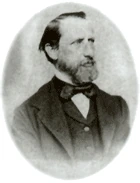
Who Henri Nestlé was, and what 'net worth' even means for someone from the 1800s

Henri Nestlé, born Heinrich Nestlé on 10 August 1814, was a German-born chemist and entrepreneur who settled in Vevey, Switzerland. In 1867 he commercialized a condensed milk and cereal infant formula called 'Farine Lactée Henri Nestlé,' which became the seed of one of the world's largest food companies. He died on 7 July 1890. Crucially, he sold his business in 1875, well before the Nestlé group as a legal entity was formed through the 1905 merger of his renamed company and the Anglo-Swiss Condensed Milk Company. By that merger date, Henri had been dead for 15 years and had held no reported ownership stake for 30 years.
Modern net worth is usually defined as total assets minus total liabilities, measured at current market prices on a specific date. That framework works reasonably well for living people with brokerage accounts, real estate filings, and tax records. For a 19th-century founder, none of that infrastructure exists in any publicly accessible database. There are no SEC filings, no Forbes archive from 1875, and no probate record widely circulated online. What we have is a reported sale price, some corporate-history narrative, and a lot of sites filling the gap with unsourced numbers.
Why the number is genuinely hard to pin down
The core problem is evidentiary: the further back in time you go, the fewer reliable financial records survive in public-accessible form. Henri Nestlé's personal balance sheet, if one was ever kept, is not in any commonly cited database. His estate at death has not been published in English-language sources that I can verify. So every estimate starts by working backward from the one hard anchor we have, the one-million-franc sale, and then making a chain of assumptions about what Henri did with that money between 1875 and his death in 1890.
- No publicly available probate record or personal balance sheet for Henri Nestlé at death (1890)
- The 1875 company sale is documented by Nestlé's own corporate sources, but post-sale asset disposition is unknown
- Henri held no reported equity in the company after selling, so the 1905 merger and all subsequent Nestlé market-cap growth is irrelevant to his personal wealth
- Currency conversion from 19th-century Swiss francs to 2026 USD involves multiple compounding assumptions
- Most web-based 'net worth' sites do not disclose their methodology, date of measurement, or conversion method
How analysts actually estimate wealth for historical founders
When a primary-source balance sheet doesn't exist, there are several methodological approaches researchers and financial historians use. Each has real limitations, and each produces a different number.
Sale-price anchoring

This is the most defensible method for Henri Nestlé specifically. You take the documented sale price (one million francs, 1875), treat it as a proxy for liquid wealth at that moment, and then either stop there or project forward to the date of death using a reasonable investment return assumption. The problem is that you don't know how Henri managed that money, whether he reinvested it in other ventures, spent it, or let it sit.
Equity-stake capitalization
This approach estimates how much a founder's ownership stake would be worth based on the company's valuation at a chosen point in time. It's the standard method for living founders like those behind today's tech companies. For Henri, it is essentially inapplicable after 1875 because he no longer held a stake. Sites that use modern Nestlé's market cap (which recently has been in the range of tens to hundreds of billions of dollars) and then attribute a 'founder percentage' to Henri are making a methodologically invalid assumption.
Inflation and purchasing-power conversion
One million Swiss francs in 1875 is not one million Swiss francs today. Conversion requires selecting a base currency (the franc was on a bimetallic standard in 1875), applying a historical inflation series, and then converting to USD using a historical or current exchange rate. Different published inflation frameworks, such as GDP deflator versus consumer price index, can produce estimates that differ by a factor of three or more. MeasuringWorth’s calculators convert historical amounts to modern values using multiple relative worth concepts, such as purchasing power and wages, so different frameworks can yield different results Different published inflation frameworks, such as GDP deflator versus consumer price index, can produce estimates that differ by a factor of three or more.. This is a big reason why the range of estimates across the web is so wide.
The best available estimate range, with context

Here is what the different publicly available sources report, laid out clearly so you can judge each one.
| Source | Reported Figure | Methodology Disclosed? | Reliability Assessment |
|---|---|---|---|
| NetWorthList | $8.88 billion USD | No | Almost certainly conflates founder with modern Nestlé company value; not defensible |
| Celebrity Birthdays aggregator | $5 million USD | No (cites Wikipedia, Forbes, Business Insider generically) | Plausible range, but no auditable reconstruction provided |
| Nestlé corporate biography (PDF) | 1,000,000 Swiss francs (1875 sale price) | Yes — documented sale event | Most reliable primary anchor; not a modern USD figure |
| Inflation-adjusted reconstruction (1875 CHF to 2026 USD) | Approx. $5M–$15M USD depending on conversion framework | Methodology-dependent | Defensible range if conversion assumptions are stated explicitly |
Based on available evidence, the most honest answer is: Henri Nestlé's personal wealth at or near the time of his death (1890) was most plausibly anchored to the one-million-franc sale proceeds from 1875, which converts to roughly $5 million to $15 million in 2026 US dollars using standard purchasing-power frameworks. There is no credible evidence supporting figures in the billions. The $8.88 billion figure almost certainly originates from someone treating Nestlé S.A.'s corporate valuation as Henri's personal wealth, which is a category error.
The assumptions that swing the number most
Three variables account for nearly all the variation you see across different estimates. Understanding them helps you evaluate any figure you encounter.
- Ownership assumption: Did Henri retain any equity after the 1875 sale? Nestlé corporate sources say he sold his company and factory outright. Sites that assume ongoing equity ownership are working from an unsupported premise.
- Valuation date: Are you measuring wealth at the 1875 sale, at Henri's 1890 death, or at some other point? Each date produces a different number. The 1867 founding date, 1875 sale date, and 1890 death date are the three most commonly chosen anchors.
- Currency and inflation conversion: One million Swiss francs in 1875 converts to very different modern equivalents depending on whether you use a CPI-based framework, a GDP-deflator approach, or a wage-based purchasing-power index. The range across reputable frameworks is approximately $5M to $15M in 2026 USD, and that spread is entirely driven by methodological choice, not by uncertainty about the underlying franc amount.
How to verify or update this estimate yourself
If you want to do your own reconstruction rather than relying on aggregator sites, here is a practical checklist that mirrors the methodology used on this site.
- Start with Nestlé's primary corporate sources: the official founder biography PDF and the Nestlé company history page both confirm the 1875 sale for one million francs. These are your evidentiary anchor.
- Choose a measurement date explicitly: 1875 (sale event) or 1890 (death). Be clear about which you're using, because they imply different things about post-sale investment returns.
- Verify ownership post-sale: corporate history confirms Henri sold to three local businessmen and exited. Reject any source that assumes ongoing equity ownership without citing evidence.
- Use a published currency conversion tool: the Swiss National Bank, the Bank for International Settlements, and MeasuringWorth.com all publish historical Swiss franc data. Run the conversion using at least two frameworks (CPI and GDP deflator) to bracket a range.
- Flag any source citing billions: if a site quotes Henri Nestlé's net worth in the billions, check whether it is actually reporting modern Nestlé S.A.'s market cap or revenue. The company's Forbes profile and financial data pages are easy cross-references.
- Note the methodology gap: if a site does not disclose a valuation date, ownership reconstruction, or conversion method, treat its figure as an unverified heuristic, not an estimate.
Common mix-ups and how to avoid them
Search results for 'Henri Nestlé net worth' (and the spelling variant 'Henri Nestle net worth') tend to surface several categories of confusion. If you are comparing figures online, look for whether the source is actually estimating Henri Seydoux net worth or is mixing up different people and company values. If you're wondering about Paul-Henri Nargeolet net worth specifically, the same core idea applies: look for the most direct, source-backed evidence rather than repeating aggregator numbers. Recognizing them quickly saves a lot of wasted reading.
- Henri Nestlé (person) vs. Nestlé S.A. (company): The most frequent and consequential mix-up. Modern Nestlé's market capitalization and net income are corporate metrics with no direct connection to what Henri personally owned. Any figure that scales with today's company value is answering the wrong question.
- Spelling variants: 'Henri Nestle,' 'Heinrich Nestle,' and 'Heinrich Nestlé' all refer to the same person, but some search results drift to unrelated pages about the brand, product lines, or contemporary executives. Check that you're reading about the 1814–1890 founder specifically.
- Founding date vs. sale date confusion: Some calculators use 1867 (when Henri commercialized his product) as the valuation start point, others use 1875 (the actual sale). These produce different wealth estimates because the company's value in 1867 is not documented with the same clarity as the 1875 sale price.
- Post-1890 Nestlé growth attributed to Henri: The 1905 merger that created the modern Nestlé group, and all the subsequent decades of growth, occurred after Henri's death and after his ownership had already ended. No legitimate methodology attributes that value to him.
- Confusion with other similarly named figures: Searches occasionally surface results for other prominent figures with similar names. Henri Nestlé is distinct from, for example, Henri Seydoux, Henri de Castries, or Henri Giscard d'Estaing, all of whom have their own separate financial profiles and business legacies.
What this all means practically
Henri Nestlé was a successful 19th-century entrepreneur who built and sold a business for one million francs, equivalent to several million dollars in today's purchasing power. Some people search for Henri Giscard d'Estaing net worth, but his financial story is unrelated to Henri Nestlé's 19th-century wealth figures henri giscard d estaing net worth. He was comfortable and financially successful by any reasonable standard of his era. He was not a billionaire, and treating him as one by borrowing today's Nestlé corporate valuation is simply wrong. The number that matters is the 1875 sale price, converted carefully to a modern currency with stated assumptions. Everything else is either speculation or a category error. If you are specifically looking for the estimate people label as Henri Leconte net worth, this article’s $5 million to $15 million range is the closest evidence-based bracket you’ll find.
FAQ
Why do some websites claim Henri Nestlé net worth is in the billions? Are they using the wrong method?
No. A figure in the billions usually comes from treating Nestlé S.A.’s modern market value as if it were Henri’s personal holdings. Henri sold his business in 1875 and was not a reported owner of the later group, so “founder percentage times today’s market cap” is a category error rather than a usable valuation method.
If I want to estimate henri nestlé net worth myself, what calculation framework should I follow?
Use the 1875 sale price as a starting anchor, then decide whether you will (1) stop at inflation-adjusted proceeds as a proxy for wealth at that time, or (2) project forward to 1890 using an assumed annual return. The biggest reason your result changes is not the math, it is what you assume about how Henri invested or spent the money between 1875 and 1890.
How do currency conversion choices affect Henri Nestlé net worth estimates?
The choice of inflation series and exchange-rate approach can shift the purchasing-power conversion materially, sometimes by several multiples. A practical way to sanity-check is to compare results using at least two common frameworks (for example, one based on consumer prices and one based on broader price levels) and see whether your final bracket stays within a reasonable band.
What red flags should I watch for when I see an Henri Nestlé net worth number online?
If a “net worth” claim lacks a date, an evidence trail for the underlying figure, and a stated conversion method from francs to today’s dollars, treat it as speculative. For Henri, you do not have a public 19th-century balance sheet to plug into a standard assets-minus-liabilities model, so the standards for evidence are even stricter.
Why can’t we calculate henri nestlé net worth like we would for a modern billionaire?
You should not expect a neat match to a modern “assets minus liabilities” spreadsheet because the underlying data (debts, holdings, estate accounting) is not broadly accessible in public online records. The most defensible approach is therefore proxy-based, anchored to the documented 1875 sale and then either left unprojected or projected with stated assumptions.
Can search-result mix-ups cause people to paste the wrong net worth figure for Henri Nestlé?
A common mistake is searching for similar-sounding names and accidentally landing on other people’s finance pages. For instance, content about Henri Seydoux, Henri Giscard d’Estaing, or other individuals may get mixed into search results for “Henri Nestlé net worth,” producing irrelevant numbers.
How can I tell whether an “as of 2026 dollars” number is actually derived responsibly?
If an estimate provides a single “net worth today” number, ask what it is adjusting for. If it is silently applying the wrong baseline year, using today’s exchange rate instead of historical conversion logic, or treating a corporate valuation as personal wealth, the figure is not comparable to evidence-anchored estimates.
What is the most defensible range for henri nestlé net worth, and how should I interpret figures outside it?
A reasonable expectation is a personal-wealth estimate in the low single-digit to mid double-digit millions (in 2026 US dollars) when using the 1875 sale anchor and standard purchasing-power conversions. Any claim that Henri was a billionaire is inconsistent with the available evidence foundation described for his personal ownership.
Henri de Castries Net Worth: Estimated Range, Sources, Limits
Henri de Castries net worth estimate with methods, reliable signals, limits of private holdings, and how to verify updat