
Claude Monet was genuinely wealthy by the time he died on December 5, 1926. Estimates of his net worth at death typically range from the equivalent of roughly $5 million to $15 million in today's money, depending on how the Giverny estate, unsold paintings, and personal assets are valued and which inflation methodology is used. That range is wide on purpose: no single precise figure is publicly verified, and any source presenting one exact number without acknowledging uncertainty should be treated with skepticism.
Claude Monet Net Worth: Lifetime and Death Estimates Explained

Julien Mercier
26 Apr 2026
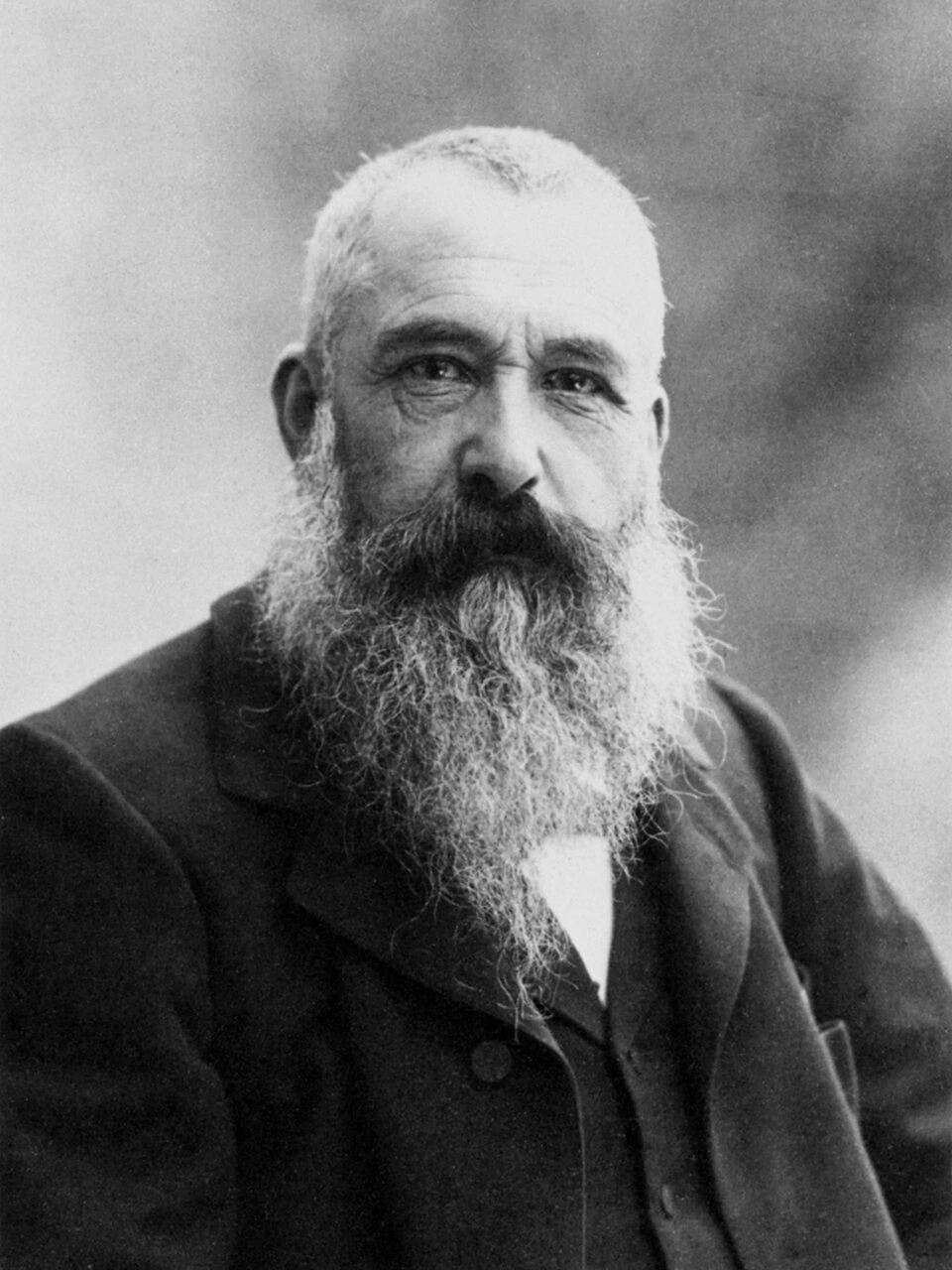
What 'net worth' actually means for a 19th-century artist
Net worth, by its standard definition, is total assets minus total liabilities at a given point in time. For a living celebrity or business executive in 2026, those inputs are relatively traceable: stock holdings, real estate records, disclosed salaries, and public filings give researchers a baseline. For Claude Monet (1840–1926), none of that infrastructure exists. He was not a public company, he did not file SEC disclosures, and French inheritance records from 1926 are not comprehensively digitized or publicly available. What researchers work with instead is a patchwork of auction records, dealer correspondence, estate inventories, and contemporary accounts.
It is also worth distinguishing between Monet's wealth during his lifetime and his wealth at death. During his career, Monet moved from near-poverty in the 1860s and 1870s to genuine financial comfort by the 1890s, when dealer Paul Durand-Ruel had helped establish a reliable international market for his work. By the time he bought the Giverny property in 1890 and began constructing the famous water garden, he was comfortably prosperous. What accumulated from that point forward was a combination of real estate, unsold inventory (his own canvases), a large collection of Japanese prints, and liquid assets from ongoing sales.
What we know (and don't) about Monet's estate at death

When Monet died, his sole heir was his son Michel Monet. Michel inherited the entire estate: the Giverny property, the paintings remaining in the house and studio, and an extensive collection of 243 Japanese woodblock prints. Michel held these assets until his own death in 1966, at which point the Giverny property and its contents passed to the French Academy of Fine Arts (Institut de France), which subsequently established the Fondation Monet.
One of the few near-contemporary numerical references we have is an archival document dated around December 11, 1926, just days after Monet's death. Reproduced in an INHA/Agorha archival entry, it itemizes the Japanese print collection with grouped valuations: individual sets valued at amounts such as 1,256 francs, 330 francs, and 2,500 francs, with a stated total of 5,386 francs for 172 items. That is a specific data point, but it represents only one category of one asset class. No comprehensive probate inventory with equivalent specificity has been made fully public, which is why estate estimates remain ranges rather than verified totals.
What we cannot know with confidence includes: the exact number and condition of unsold canvases at the time of death and their 1926 market values, the amount of liquid cash or bank holdings, any outstanding debts or financial obligations, and the precise appraised value of the Giverny property in December 1926. Provenance disputes can further complicate retrospective valuations. As The Art Newspaper has documented in cases involving major Impressionist estates, heirs and institutions can contest valuations decades after the fact when sale histories are unclear, which illustrates how fragile historical estate estimates can be.
How net worth estimates for Monet get built
When a researcher or reference site publishes a Monet net worth figure, they are typically combining several inputs and making explicit (or implicit) assumptions about each. Understanding those inputs helps you judge whether a figure is credible.
- Real estate value: The Giverny estate, including the house and the water garden, was a significant asset. Researchers estimate its 1926 value using comparable French rural property sales from the period, then apply inflation conversion.
- Unsold paintings: Monet deliberately retained many works. Estimates of how many canvases remained at Giverny at his death vary, but the figure is generally placed at several dozen to over a hundred. Assigning 1926 market values to those works requires referencing auction results and dealer correspondence from the same period.
- Japanese print collection: The archival 1926 valuation of 5,386 francs for 172 prints provides a concrete anchor for this asset class, though the full 243-print collection may have been valued differently in a formal estate context.
- Liquid assets and income streams: Monet received regular payments from dealers, primarily Durand-Ruel and later Bernheim-Jeune, in the years before his death. Estimating the cash on hand requires inference from correspondence and known payment schedules rather than bank records.
- Liabilities: No major debts have been documented for Monet's late career, but researchers must account for household operating costs, staff wages at Giverny, and any outstanding financial obligations.
The result of combining these inputs is a range, not a point estimate. Published figures that present a single, precise number (say, exactly $12.4 million) are almost certainly rounding an estimate to look more authoritative than the underlying data supports. Treat any figure without an acknowledged margin of error cautiously.
Monet's finances in practice: how he actually made and held wealth

Early career: financial struggle
Monet spent much of the 1860s and 1870s in genuine financial difficulty. He borrowed from friends including Frédéric Bazille, struggled to sell work, and at several points could not afford paint or canvas. This early period contributes essentially nothing to a net worth estimate at death; it matters mainly as context for understanding how dramatically his financial position changed.
The Durand-Ruel relationship and market establishment

The turning point was dealer Paul Durand-Ruel's sustained promotion of Impressionism in France and especially the United States through the 1880s. Monet's prices rose meaningfully after a successful 1886 exhibition in New York. By the early 1890s, Monet had enough financial security to purchase the Giverny property outright and begin its transformation. The Art Institute of Chicago describes Monet’s transformation of the Giverny property and connects it to Japanese-style elements, including a Japanese wood bridge built after he bought the property in 1890. This is the period when real wealth began to accumulate.
Later career income and the Water Lilies commission
In his final decades, Monet's income came from a combination of gallery sales, private commissions, and the strategic retention of works he expected to appreciate. The monumental Water Lilies series, which he gifted to the French state in 1926 (installed in the Orangerie), represented a significant transfer of asset value rather than income. The paintings donated to the state were not part of the estate Michel inherited, which is an important deduction from any gross asset estimate.
The estate's post-death trajectory
Michel Monet held the estate for 40 years before his death in 1966. During that period, the market value of Monet's works increased dramatically as Impressionism became the dominant force in the international auction market. The estate's value in 1966 was vastly higher than in 1926, which is why some sources conflate Michel's estate value with Claude's. They are not the same thing.
Any estimate of Claude Monet's net worth should be anchored specifically to December 1926 conditions. If you are comparing this with published “Claude AI net worth” style figures, keep in mind they use entirely different data and timeframes than Monet’s 1926 estate net worth estimate. If you are comparing this with published Claude Bosi net worth figures, remember they come from modern reporting and a different person entirely.
If you are searching for a specific "Claude Comair net worth" number, treat it as separate from Monet’s 1926 estate totals because it reflects a different person and a different reporting context. If you want to interpret those published numbers, compare them against Claude Giroux net worth style breakdowns and the specific date they refer to.
Inflation and currency conversion: the numbers behind the numbers
Converting 1926 French francs to 2026 US dollars (or euros) involves several layers of complexity, and this is where many published estimates diverge most significantly.
The French franc in 1926 had already been significantly devalued relative to its pre-World War I value. France experienced serious inflation during and after the war, which affects how you interpret any franc-denominated figure from that period. The 5,386-franc valuation of the Japanese print collection, for example, needs to be converted using a France-specific price index for the 1920s, not a US CPI series. INSEE provides the Consumer Price Index and Harmonised Index methodology for France and publishes historical series that allow researchers to express historical quantities in constant euros. This is the appropriate tool for any France-to-France inflation comparison.
For converting to US dollars, a second step is required: converting constant euros to dollars using an appropriate exchange rate. Researchers sometimes use purchasing power parity (PPP) instead of nominal exchange rates for historical comparisons, which can produce substantially different results. The Minneapolis Fed inflation calculator and BLS CPI-U historical tables can anchor the US dollar side of the calculation, but they apply US inflation methodology, not French. The BLS R-CPI-U-RS series provides a historically consistent series adjusted to current methods, but even this has acknowledged limitations for pre-1940 estimates. In practice, the gap between a careful methodology and a casual one can shift a Monet estimate by several million dollars, which is why the published range is wide.
| Conversion approach | What it does well | Key limitation |
|---|---|---|
| French CPI (INSEE) to constant euros | Correct base currency, accurate French price history | Does not account for USD/EUR exchange variation |
| US CPI-U (BLS) applied to converted dollar figures | Allows USD comparison across time | Requires a reliable 1926 franc-to-dollar conversion as starting point |
| Purchasing power parity (PPP) | Adjusts for cost-of-living differences between countries | Historical PPP data for 1926 is estimated, not measured precisely |
| Art market index adjustment | Anchors valuation to actual art price trends | Monet-specific index data for 1926 is sparse; general art indices introduce noise |
No single approach is definitively correct. Responsible estimates disclose which method was used and acknowledge the resulting uncertainty range. If a source does not explain its conversion methodology, the specific dollar figure it presents is essentially unverifiable.
How to check and use the estimates on this site

When you look at a net worth estimate here, the most useful thing to do is read the methodology note alongside the figure itself. The estimate is presented as a range for a reason: the underlying data does not support a single verified total, and collapsing it to one number would overstate certainty. Focus on the midpoint as a reasonable working figure, but keep the range in mind when using the estimate for research or comparison.
For primary source verification, the most useful starting points are: the Fondation Monet's published institutional history, the Académie des beaux-arts' records of the Michel Monet bequest, INHA/Agorha archival entries for Monet-related documents, and period auction catalogues from Durand-Ruel and Bernheim-Jeune available through major art library archives. Estate probate records from French notarial archives (Archives nationales) may contain additional detail, though access requires direct archival research.
For currency conversion verification, use INSEE's published CPI series for the French franc baseline and then apply a documented 1926 exchange rate before using BLS CPI-U or the Minneapolis Fed calculator for the US dollar leg. Document every step. If you are comparing Monet's estate to those of other historical figures, make sure the same methodology is applied consistently across all subjects.
If you are researching Monet as part of a broader look at cultural and artistic wealth, you may find it useful to compare his profile to those of other prominent figures covered on this site. If you are comparing Monet’s financial profile to other famous names, you may also want to look at estimates for Bertrand Cantat’s net worth bertrand cantat net worth. The financial profiles of historical artists differ significantly from those of contemporary public figures (like a professional athlete or tech entrepreneur), and the methodological gaps are correspondingly larger. That context matters when interpreting any figure with confidence.
The bottom line on Monet's wealth
Monet died in 1926 as a wealthy man by any reasonable standard, with assets that included a substantial property in Giverny, a large inventory of his own paintings, a documented collection of Japanese prints, and the accumulated proceeds of decades of successful art sales. The best-supported estimates of his net worth at death, converted to modern values using appropriate inflation methodology, fall somewhere in the $5 million to $15 million range, with most careful estimates clustering toward the middle of that band. That range reflects genuine uncertainty in the historical record, not sloppy research. Any source claiming to know the exact figure to the dollar should be read as an approximation dressed up as precision.
FAQ
What does “net worth” mean for Claude Monet’s case, since there were no modern financial filings?
In Monet’s case it is an estimated snapshot, assets minus liabilities, built from partial records (estate inventories, auction outcomes, dealer documentation) rather than audited accounts. This is why estimates usually omit or approximate items like outstanding debts, exact cash holdings, and the condition-based marketability of remaining works.
Why do Monet net worth numbers sometimes look much higher or lower than the $5 million to $15 million range?
Most outliers come from mixing timeframes or asset scopes, for example using the value of the collection at Michel Monet’s later death (1966) instead of December 1926, or counting works donated to the state as if they were part of the inherited estate. Another common cause is using an exchange-rate or inflation method that does not match France-specific price dynamics.
How should I treat a source that claims Monet’s exact net worth (a single dollar figure)?
Treat it as a rounded estimate unless the source explicitly shows the methodology for each major asset category and provides a margin of error. If there is no transparent breakdown (property valuation approach, inventory assumptions, liabilities treatment, and currency conversion steps), the “exact” figure should be considered unsupported precision.
What assets are usually included, and which ones are frequently miscounted?
Typically included are the Giverny property, retained inventory of paintings in the house and studio, and documented Japanese print holdings. Donated works, especially the Water Lilies series transferred to the French state in 1926, are often miscounted when people compute a broad “gross value” without tracking what actually remained in the estate Michel inherited.
Does Monet’s lifetime wealth equal his net worth at death?
No. Monet’s financial security improved during the 1880s and early 1890s, but his net worth at death depends on what remained after spending and what assets were retained versus sold. Many estimates also underweight how wealth can be tied up in unsold art inventory rather than liquid cash.
How much do conversion choices (francs to euros to USD) change the result?
A lot. Even with the same underlying franc-denominated data, changing the inflation series (France-appropriate index versus a US-focused CPI), or switching from nominal exchange rates to PPP-style adjustments can shift the modern USD value by several million dollars. The biggest differences usually come from the “leg” that converts constant euros to USD and the purchasing-power assumption used.
What is the best way to sanity-check a Monet net worth calculation I see online?
Check three things: (1) the date the estimate is anchored to (it should be December 1926, not 1966), (2) whether the method explains how the franc amounts are converted (France index, documented exchange rate, and consistency for the USD leg), and (3) whether the method excludes assets donated to the state and clearly separates inherited estate items from transfers.
Could debts or hidden liabilities meaningfully alter the estimate?
Yes, but they are hard to quantify. Since comprehensive probate debt listings are not broadly digitized, most published ranges implicitly assume limited or unknowable liabilities. That limitation is one reason credible estimates stay in a band rather than committing to a point value.
Why can provenance disputes change an estate valuation even decades later?
If the chain of ownership or authenticity of specific works is questioned, it can reduce the assumed market value or create legal uncertainty. Retrospective valuation becomes fragile when later documentation and sale records are incomplete, which can lead to contested appraisals and revised totals.
If Michel Monet inherited the estate, why do some people credit Michel’s later holdings to Claude Monet?
Because the later market value of Impressionism rose dramatically, people sometimes treat the post-1966 wealth as a proxy for Claude’s estate. The article’s key distinction is that Michel’s holding period changes the market value, so Claude Monet’s net worth at death must be evaluated using December 1926 conditions and which works remained in the inherited estate at that time.
Next Article
Claude Giroux Net Worth: How to Estimate Earnings Reliably
Estimate Claude Giroux net worth using contract, bonuses, endorsements, and a repeatable sourcing method with ranges.