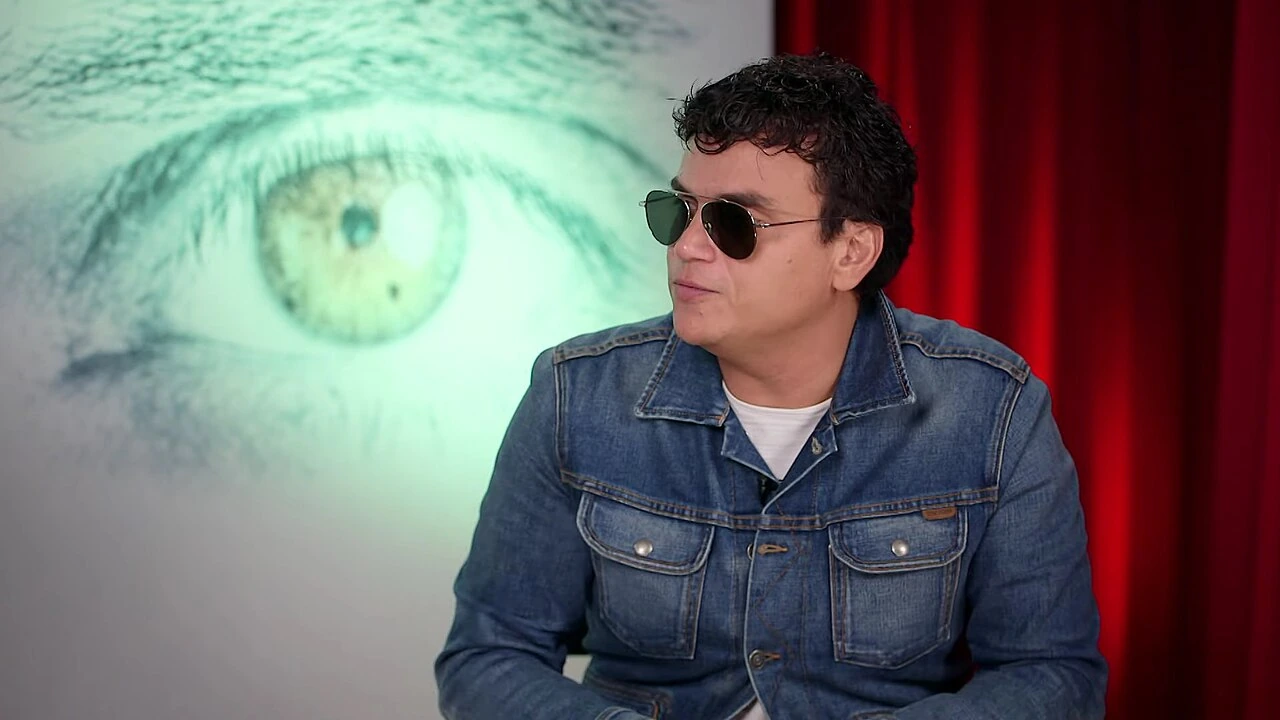
Michel Qissi's net worth in April 2026 sits in the range of roughly $750,000 to $1 million, based on the best publicly available signals. That is not a headline-grabbing number, and it is not meant to be. Qissi is a working actor, filmmaker, and martial artist whose career has generated steady but modest income over several decades, not the kind of blockbuster wealth that puts someone on a Forbes list. What follows is a transparent walk-through of how that estimate is constructed, what drives it, and how to pressure-test any figure you find online.
Michel Qissi Net Worth Estimate: How It’s Calculated

Julien Mercier
20 Apr 2026

Who Michel Qissi is and why people search his wealth

Michel Qissi (born Mohammed Qissi on September 12, 1962) is a Moroccan-Belgian actor, filmmaker, and martial artist who built his name through 1980s and 1990s action cinema. He is probably best known for playing Tong Po, the main villain in Kickboxer (1989), alongside Jean-Claude Van Damme, a childhood friend and longtime collaborator. AFI Catalog lists Kickboxer (1989) with Michel Qissi credited for the character “Tong Po.”. That role alone gave him a lasting foothold in martial arts film culture, and his screen presence has kept him in the conversation for action-film enthusiasts ever since.
Beyond acting, Qissi stepped behind the camera: AFI Catalog documents him as the director and writer of Extreme Force (2001), produced under the Buena Vida banner. That credit matters for the wealth discussion because it signals entrepreneurial involvement in entertainment production, not just a salaried acting role. He also registered a solo business entity in France (SIREN 805 120 375, classified under adult continuing education, code 8559A) in October 2014, which points to training or coaching activity as an additional income stream. Put those pieces together and you have a profile that attracts legitimate curiosity about accumulated wealth, even if the numbers are far more modest than his more famous contemporaries.
What net worth actually means (and what it does not)
Net worth is a snapshot, not a salary. The formula is simple: total assets minus total liabilities equals net worth. Assets include things like cash, real estate, business equity, and investments. Liabilities include mortgages, loans, and any other outstanding obligations. If someone owns a house worth $400,000 but still owes $300,000 on the mortgage, that property contributes only $100,000 to net worth. This distinction is critical because many readers conflate a high-profile career with high accumulated wealth, but if income has been inconsistent or offset by debt, the net figure can be surprisingly modest.
Public estimates for people outside the ultra-high-net-worth tier (think Forbes 400 territory) are necessarily approximate. Forbes itself describes its methodology as deliberately conservative, based on valuation multiples applied to revenue and profit estimates, with a defined 'as of' date and a liquidity discount for private assets. For someone like Qissi, who does not appear on any major wealth index and whose financial filings are not public, estimates rely on inference: career earnings extrapolated from industry benchmarks, visible asset signals, and what can be reasonably assumed about liabilities. The number is a defensible estimate, not an audited balance sheet.
The estimated range and what drives it

The most credible range for Michel Qissi's net worth as of April 2026 is approximately $750,000 to $1 million. One aggregator site (PeopleAi) published a time series showing estimates of around $463,000 in 2021 rising to roughly $772,000 by mid-2025, which suggests incremental accumulation consistent with modest ongoing income rather than a single windfall event. Applying a reasonable forward projection to April 2026 and layering in the multiple income streams discussed below, the upper bound of around $1 million is plausible but should not be treated as confirmed. If you are trying to gauge the gregorio duvivier net worth comparisons people mention online, use the same evidence-first mindset and check the source methodology net worth range.
The main drivers behind this estimate are acting residuals from catalog titles that still circulate (Kickboxer in particular has had significant home-video and streaming afterlife), filmmaker earnings from his directorial work, martial arts instruction or coaching activity tied to his French business entity, and whatever passive income or appreciation has accumulated on any real property he holds. None of these channels are individually large, but together, over a 30-plus-year career, they produce a plausible mid-six-figure to low-seven-figure accumulation.
Where his income has come from
Acting and film production earnings
Qissi's acting career spans the late 1980s through the 2000s, anchored by his villain role in Kickboxer and appearances in other martial arts genre films. Fees for supporting or secondary roles in that era's mid-budget action productions typically ranged from a few thousand to tens of thousands of dollars per project, with no guarantee of backend points unless negotiated specifically. His directing and writing credit on Extreme Force (2001) through Buena Vida represents a different economic relationship: as a writer-director, he may have held an equity or profit-participation stake, though the film's commercial scale was limited. Box-office tracking resources like The Numbers maintain records for his credits, though the films in question were not major theatrical releases generating nine-figure revenues.
Martial arts instruction and training business

The French business registry entry for Mohammed Qissi (SIREN 805 120 375), registered in October 2014 in Sainte-Geneviève-des-Bois, lists its activity code as 8559A (adult continuing education). This is consistent with running a martial arts school, personal coaching, or professional training seminars. Solo instructor businesses in this category in France typically generate annual revenue in the range of €30,000 to €100,000 depending on clientele and scale, and net margins after taxes and overhead can be thin. Notably, the registry shows no collective insolvency proceedings, which is a positive signal, but accounts are listed as not published, meaning revenue figures are not publicly verifiable.
Residuals, licensing, and brand activity
Kickboxer has had a long tail on home video, streaming platforms, and cult-film circuits. Residual payments from Screen Actors Guild agreements (if applicable) or licensing deals can generate modest but recurring income for actors whose work stays in circulation. Qissi has also maintained visibility through martial arts events and conventions, which can produce appearance fees. These are not large income streams individually, but they are relatively passive and can compound over time.
Assets and lifestyle signals
There is no public record of significant real estate holdings, luxury vehicle ownership, or major investment positions tied to Michel Qissi. His registered business address in the Essonne department of France (Sainte-Geneviève-des-Bois) is a mid-sized suburban commune south of Paris, not an area associated with high-net-worth real estate. This is consistent with a comfortable but not lavish lifestyle, and it is one of the reasons the estimate skews toward the lower end of the range rather than suggesting hidden wealth.
From a brand-value perspective, Qissi benefits from sustained cult status in the martial arts and action-film community. That kind of recognition can support ongoing income through licensing of image rights, fan conventions, and special-edition releases, but it rarely translates into the kind of equity-backed wealth that would push net worth significantly higher. Compare this to a figure like Michel Sardou, whose decades of French music catalog represent a very different class of intellectual property asset and accumulated wealth.
For context on how this compares to other celebrities, you may also see different methodologies discussed in articles covering Michel Sardou net worth. Qissi's profile is more comparable to other working genre filmmakers and actors whose net worth reflects a long but modestly scaled career.
Debt, liabilities, and why the salary story is incomplete
No public information links Michel Qissi to significant personal debt, business insolvency, or legal judgments. The French business registry explicitly notes 'Procédure collective: Aucune' (no collective proceedings), which means his registered business has not gone through formal insolvency or restructuring. That is a useful negative signal: it suggests no major financial distress at the business level.
That said, the absence of public debt records does not mean the balance sheet is clean. Private mortgages, personal loans, or obligations tied to film productions are not visible in any registry. For a filmmaker who self-produced or co-produced projects, production debt is a real possibility. Additionally, working across Belgium, France, and international markets means potential exposure to multiple tax jurisdictions, which can complicate the net picture. The honest answer is that liabilities for someone at this wealth level are largely invisible to outside researchers, and any net-worth estimate should carry a meaningful margin of uncertainty on the liability side.
The gap between career earnings (the total you might estimate from summing up acting fees and production payments over 30 years) and net worth is also affected by lifestyle spending, reinvestment in productions, and the natural depreciation of certain assets. A career that generated $2 million in gross earnings over three decades can easily result in a current net worth of under $1 million once taxes, living costs, and reinvestment are accounted for. This is not unusual and should not be read as a red flag.
How to verify net worth claims and spot unreliable sources

The single most important question to ask about any net-worth figure is: where does the number come from? Credible estimates, like those Forbes constructs for the Forbes 400, disclose the methodology explicitly: they name the assets, apply defined valuation multiples, state an 'as of' date, and describe how private business values are inferred. Most celebrity net-worth websites do none of this. A single round number ($5 million, for example) without any explanation of what assets produce it, as of what date, and using what valuation assumptions is not a defensible figure. It is a guess dressed up as a fact.
The PeopleAi time series for Qissi is a useful illustration of both the better and worse end of this spectrum. On the positive side, it presents a time-stamped series rather than a single static number, which acknowledges that wealth changes over time. On the negative side, it explicitly disclaims that the figure is 'calculated from publicly available information about monetization programs' and is not accurate, by the site's own admission. That is a red flag you should take seriously: a source that tells you its own figure is unreliable is not a source you should cite as authoritative.
Red flags to watch for
- A single round-number figure with no breakdown of assets or liabilities
- No 'as of' date, or a date that is clearly outdated by years
- No methodology section or explanation of how the estimate was reached
- Figures that appear to be copied across multiple sites without variation (a sign of circular sourcing)
- Sites that claim to have 'verified' or 'confirmed' net worth for a private individual without referencing audited financials or legal disclosures
- Dramatic discrepancies between sites without any explanation (for example, one site says $500,000 and another says $5 million for the same person)
More reliable approaches
- Check official business registries (like Societe.com for France) to identify registered business entities and any insolvency proceedings
- Use entertainment credit databases like AFI Catalog or The Numbers to build a factual career timeline and estimate earning windows
- Cross-reference multiple sources and note where estimates converge vs. where they diverge wildly
- Look for methodology disclosures on any site publishing a figure, and weight sources that explain their reasoning more heavily
- Treat any estimate as a range, not a precise number, and adjust upward or downward based on new publicly available information
For Michel Qissi specifically, the most defensible approach is to anchor the estimate in documented career activity (AFI credits, business registry data, industry earnings benchmarks for comparable genre actors) and treat the PeopleAi time series as a rough directional indicator rather than a precise figure. You may also see claims about Sergio Danguillecourt net worth, but those should be evaluated with the same evidence-first approach. If you are also curious about Silvestre Dangond net worth, you can apply the same evidence-first checks used in this article to separate solid signals from guesswork. The resulting range of $750,000 to $1 million as of April 2026 reflects that discipline: it is not inflated by speculation, and it is not dismissively low for someone with a documented multi-decade career in entertainment and instruction.
FAQ
If multiple websites list different “Michel Qissi net worth” numbers, how do I know which one is most credible?
Use the same evidence checklist the article uses: identify specific, documentable income sources (acting credits, directing/writing work, the French business registration), then sanity-check whether there are plausible assets that match that cashflow. If a site cannot name at least a few asset categories (real estate, business equity, investments) and explain how each was valued, treat the number as speculation, not an estimate.
Why can Michel Qissi net worth estimates be much higher or lower than his career earnings look like?
A major reason online figures swing is that many estimates treat “earnings” as “wealth.” Net worth is after taxes, living costs, production reinvestment, and debt, so two people can earn similar amounts over a career but end with very different net worth depending on liabilities and spending. When comparing sites, look for whether they model taxes and liabilities rather than just aggregating gross career revenue.
How does his French business activity (adult continuing education code) affect the net worth calculation if financial statements are not public?
If Qissi’s French business entity earns money but keeps accounts private, the missing piece is profit retention versus owner withdrawals. Some owner-instructor models distribute cash to the individual quickly, which increases personal net worth, while others reinvest into equipment, marketing, or staff, which can delay wealth accumulation. Without published accounts, estimates should stay in a wider band.
Do movie residuals from Kickboxer meaningfully change Michel Qissi net worth, and how should I think about them?
Residual income is often under- or over-estimated. For cult-action titles, payments can be sporadic (licensing cycles, platform changes, convention boosts) and may be smaller than people assume unless rights deals include backend participation. The safer approach is to treat residuals as a modest recurring contributor, not a single windfall event, unless the estimate identifies specific rights or contracts.
If there is no obvious public record of major assets, how can his net worth still reach the upper end of the range?
His lack of visible “big ticket” assets (no clear records of luxury real estate, major high-value holdings, or large public investment positions) is a constraint on how high net worth can reasonably go based on open-source signals. However, absence of evidence is not proof, so the practical takeaway is to treat the upper bound as a range driven by plausible business equity, not by presumed luxury assets.
Does the French registry showing no insolvency proceedings mean Michel Qissi has little or no debt?
Yes, it can. A business can have “no collective insolvency proceedings” while still having other liabilities like taxes owed, unpaid supplier invoices, or private loans. For net worth, what matters is total liabilities tied to both personal and business obligations, and those are often invisible in public registries.
Why do net worth estimates for the same person change from year to year, even without a new big project?
Period-end net worth can move year to year due to timing, such as whether income is recognized in one year and taxes or withdrawals occur later, or if film-related costs are incurred around production cycles. That’s why a range at a specific “as of” date is more reliable than a single point estimate, and why time series should be treated as directional.
What are the biggest red flags that a Michel Qissi net worth estimate is not trustworthy?
When you see a net worth figure with no disclosed methodology, ask three questions: (1) What assets are counted, (2) what is the valuation basis for each asset, and (3) what “as of” date is used. If the answer is vague, or it relies on generic “public monetization program” language, it is not possible to validate the number against known constraints.
Should I interpret Michel Qissi net worth as what he earns now, or is it something else?
Net worth is a stock variable, not income flow. If someone reads a number like “$1 million” as monthly earnings, they will be misled. A practical check is to look for continuity: does the person have ongoing work signals (acting appearances, coaching/instruction activity, licensing events) that plausibly produce and preserve wealth at that level? If not, the figure is likely not modeling cashflow.
How should I compare Michel Qissi net worth to other entertainers without getting a false conclusion?
If you are trying to compare “Michel Qissi net worth” to other celebrities mentioned online, normalize for career type and asset class. Action-film working actors often have less durable, equity-like wealth than creators with long-lived intellectual property portfolios, so a direct comparison can be misleading unless the other person’s assets and rights structure are known.
Next Article
Silvestre Dangond Net Worth: Estimate, Sources, and How to Verify
Estimate Silvestre Dangond net worth with sources, income breakdown, verification tips, and why figures vary online.