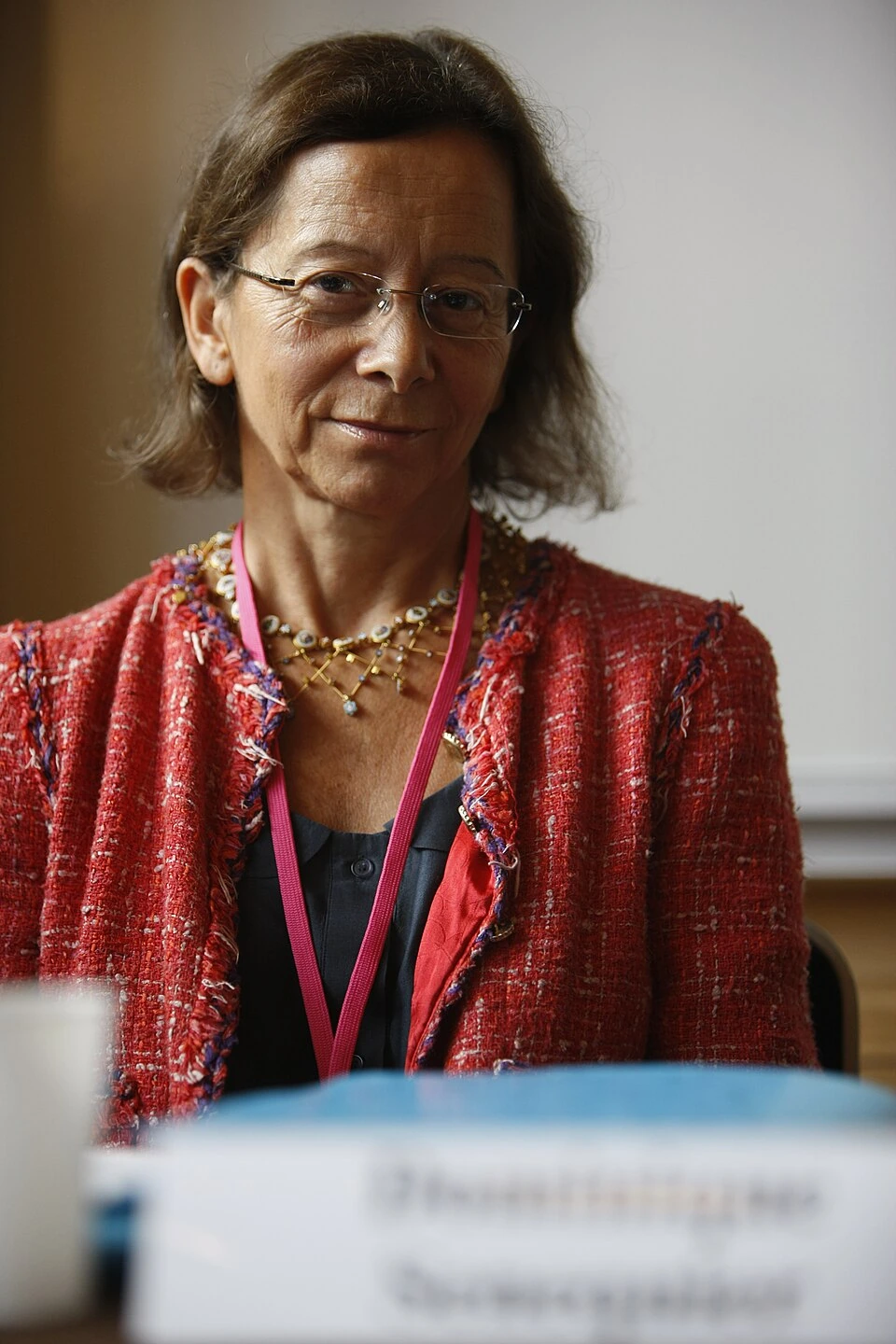
The most defensible estimate for Dominique de Villepin's net worth today is in the range of €10 million to €20 million, with €15 million as a reasonable midpoint. That figure comes from combining what we know about his post-government consulting income, a reported rare-books auction that raised roughly €3 million, his Paris address at one of France's most expensive arrondissements, and media investigations that have publicly landed on figures between €11 million and €15 million. The $145 million figure floating around some celebrity-wealth sites is not credible, and the $100,000–$1 million range on others is almost certainly too low for someone who ran a management consulting firm billing over €1.6 million in a single year.
Dominique de Villepin Net Worth: Estimate, Sources, Method

Julien Mercier
26 Apr 2026

Who exactly is Dominique de Villepin?

This name can cause confusion, so let's pin it down clearly. The person behind the net-worth searches is Dominique Marie François René Galouzeau de Villepin, born November 14, 1953 in Rabat, Morocco. He served as Secretary-General of the Élysée under Jacques Chirac, then as Foreign Affairs Minister, Interior Minister (2004–2005), and finally as Prime Minister of France from May 2005 to May 2007. His full birth name, the precise dates of his premiership, and his role as founder of the consulting firm Villepin International are the clearest identity anchors when separating him from anyone else who might share part of this name.
One sibling topic worth flagging: Arthur de Villepin, his son, is a separate figure with his own financial profile and should not be conflated with his father's wealth estimates. When you see wealth claims attributed to 'de Villepin,' always confirm which family member is being discussed before accepting a number.
What actually counts toward his net worth
Net worth is assets minus liabilities, and for a former French Prime Minister turned consultant and writer, those assets span several categories. Here is what is publicly evidenced or reasonably inferred for Dominique de Villepin specifically:
- Government pension and post-prime-ministerial benefits: Former French PMs receive an annual pension and, until recent policy debates, a range of state-funded allowances. Public reporting from 2016 noted he received around €96,000 per year including €40,000 toward a chauffeur. These are income flows, not assets, but they contribute to wealth accumulation over time.
- Consulting firm Villepin International (SIREN 503 867 640): Founded April 3, 2008, structured as a SASU (single-shareholder simplified joint-stock company), registered at 40 Avenue Foch, Paris 75016, with activity codes covering management consulting and investment advisory. The 2013 turnover was reported at over €1.6 million, and 2025 company accounts are publicly downloadable via the French business registry.
- Legal career income: After leaving government he qualified as an attorney before transitioning into consulting, adding another professional income stream in the years immediately following his premiership.
- Book publishing and writing: He has published multiple books of poetry and political writing. French publishing advances and royalties are modest in isolation but add to the overall picture.
- Rare book and art collection: One of the more concrete asset data points: he reportedly sold a collection of rare old books at auction for approximately €3 million. This is a documented liquidation event that adds real substance to wealth estimates.
- Real estate: His registered professional address is 40 Avenue Foch in the 16th arrondissement of Paris, one of the most expensive addresses in Europe. Whether he owns or leases this is not publicly documented, but property in this area would represent significant asset value if owned.
- Speaking and advisory income: High-profile former heads of government routinely command €50,000–€150,000 per speaking engagement. One investigative piece noted a figure of €100,000 for a single day of consultancy at the Quai d'Orsay level, though specific rates for Villepin are not formally disclosed.
- Investigated payment from Libyan state-linked funds: A 2017 Mediapart investigation reported that he was questioned about a payment of nearly €500,000 traced to Libyan state-linked sources. This is an allegation in an investigative context, not a confirmed asset, and is included here for transparency rather than as a reliable wealth component.
Income and asset sources you can actually check

If you want to go beyond secondhand estimates, here are the concrete public sources that have usable data on his financial activity:
- Pappers.fr (French business registry aggregator): Search SIREN 503 867 640 or 'Villepin International' to access legal filings, company accounts including the 2025 comptes sociaux, director identity confirmation, and NAF/APE code 70.22Z (management consulting). This is the most structurally reliable public data point available.
- Infogreffe.fr and Societe.com: Official French commercial registry portals where you can download filed annual accounts for V INTERNATIONAL VILLEPIN INTERNATIONAL, verify registered capital (currently €900), and track any changes to the company's status.
- Journal Officiel de la République Française: Occasionally publishes disclosures related to government roles, honors, and public appointments that can help verify income-related positions.
- Media investigations from Le Point, Le Monde, Mediapart, and Economiematin: These are not audited disclosures, but they are the closest thing to investigative wealth reporting on a private French citizen. Cross-referencing claims across multiple outlets reduces the risk of accepting a single source's errors.
- French auction house records: If additional art or book collection sales occurred, public auction results (through houses like Sotheby's Paris, Christie's, or Drouot) would be findable by name.
What different sources say and why the numbers vary so much
| Source | Estimate | Reliability Assessment |
|---|---|---|
| Le Point (2025) | €15M lower bound described as 'basse estimation' | High: investigative journalism with named reporters and sourcing |
| Lama-Fortune (Nov 2024) | ~€11 million | Medium: transparent about estimation methodology, public-source aggregation |
| Melty (recent) | At least €15 million | Medium-low: media estimate, links to art/real estate narrative without audited backing |
| Economiematin | ~€4M pre-auction (plus ~€3M from rare books sale) | Medium: references specific auction event, which is checkable |
| Mediamass (Dec 2025) | $145 million | Very low: self-contradicts earlier claims, no credible sourcing, inflated pattern common across this site |
| CelebsMoney (2026) | $100,000–$1 million | Very low: no audited evidence, range too wide to be useful, dramatically underestimates consulting income alone |
The wide spread between $100,000 and $145 million tells you more about the quality of wealth-estimation websites than it does about Dominique de Villepin. The outliers on both ends share a common problem: they are not anchored to documented income events. The more defensible estimates (€11M to €15M+) come from sources that at least reference specific asset categories like the rare-books auction, Villepin International's disclosed turnover, and real estate in a high-value Paris neighborhood.
How these estimates are actually calculated (and where they go wrong)
Wealth estimation for a private individual who has never filed a French political asset declaration (which was not mandatory during his active years in the same way it is today) relies on reconstructing a plausible balance sheet from public signals. The methodology typically works like this: start with known income streams (government salary during service, pension post-service, consulting firm revenue), apply reasonable expense and tax assumptions, then add documented asset events (the rare-books auction), and adjust for plausible but unverified assets (Paris real estate, investment portfolio). The honest answer is that this is a best-estimate reconstruction, not an audit.
Several things make this harder than it looks. First, French privacy law is strong, and high-net-worth individuals are not required to disclose personal balance sheets the way publicly traded companies are. Second, a consulting firm with €900 in registered share capital can still generate millions in fees without that being obvious from company filings, especially if it operates as a pass-through to personal income. Third, currency and time normalization matters: a 2013 revenue figure of €1.6 million is not the same as €1.6 million in 2026 purchasing power, and estimates that do not adjust for this introduce drift. Fourth, the Libyan-funds allegation introduces a potential liability or reputational risk that some estimates ignore entirely.
A well-constructed estimate would: (1) anchor to the Villepin International 2025 company accounts as the most current verifiable business snapshot, (2) add the documented rare-books auction proceeds of ~€3 million, (3) apply a conservative multiplier on cumulative consulting income since 2008 net of taxes and expenses, (4) note the Paris address as a potential real estate asset without assigning a specific value without documentation, and (5) leave the Libyan-funds payment as an open uncertainty rather than including or excluding it from the total. For verification of Villepin International’s registered business details and access to its financial accounts on Societe.com, you can cross-check the company’s public page for blank" rel="noopener noreferrer">SIREN 503 867 640 and “Comptes de VILLEPIN INTERNATIONAL.” blank" rel="noopener noreferrer">Villepin International's disclosed turnover.
How to verify this yourself today

If you are doing this research in April 2026, here is what to do step by step:
- Go to pappers.fr and search 'Villepin International' or SIREN 503 867 640. Download the 2025 comptes sociaux PDF. Check revenue, operating result, and any related-party disclosures.
- Cross-reference on infogreffe.fr for the same company to confirm the latest filed accounts and any changes in company status.
- Search 'Dominique de Villepin' on the Drouot, Christie's Paris, and Sotheby's Paris auction archives to see if any additional collection sales have occurred since the reported rare-books auction.
- Read the Le Point investigations from 2014 and 2025 directly rather than relying on aggregator summaries. These contain the most specific financial claims and name the sources behind them.
- Treat any site that claims a net worth above €50 million or below €5 million with strong skepticism unless they provide specific, checkable evidence for those figures. Mediamass in particular has a documented pattern of inflated estimates across French political figures.
- Check Le Parisien and similar outlets for any 2025–2026 reporting on former prime ministers' state benefits, which occasionally surfaces specific public payment figures.
- If you need this for a professional purpose, a French wealth research firm or a legal information provider with access to the BODACC (Bulletin Officiel des Annonces Civiles et Commerciales) can provide more granular corporate filing history.
Red flags to watch for
- Any site claiming $100M+ without naming a specific asset source (real estate address, company stake, documented sale): these are almost always auto-generated or copied from unreliable aggregators.
- Estimates that have not been updated since before 2020: the consulting firm has continued operating and the wealth picture has changed.
- Sources that confuse Dominique de Villepin with Arthur de Villepin, his son, or with other members of the extended Galouzeau de Villepin family.
- Claims that treat the Libyan-funds payment as confirmed personal income rather than an investigated allegation.
- Sites that list a precise single figure (e.g., '$4,623,000') without any methodology: precision without evidence is a red flag, not a sign of accuracy.
The bottom line: what range makes sense and why
Putting this together, a defensible net-worth range for Dominique de Villepin as of April 2026 is approximately €10 million to €20 million, with €13 million to €15 million as the most supported central estimate. That range is built on: cumulative consulting income through Villepin International since 2008 at documented revenue levels, the ~€3 million rare-books auction, a state pension that has been running for nearly two decades, and the implicit real estate and investment portfolio that would typically accompany a 70-year-old former Prime Minister with this income history. The €15 million lower-bound framing from Le Point's 2025 investigation is the closest thing to a reported number from a serious outlet and aligns reasonably well with Lama-Fortune's €11 million independent estimate, suggesting the true figure is somewhere in that corridor.
For comparison, other prominent French financial figures of a similar profile, such as Dominique Senequier or Dominique Guenat, operate in wealth ranges that reflect specific business equity stakes, which can push totals dramatically higher. Some readers may also be searching for Dominique Guenat net worth, which is a different person with a separate wealth profile. If you were actually looking for richard mille dominique guenat net worth, note that Dominique Guenat is a different person with a separate wealth profile than Dominique de Villepin. Villepin's wealth, by contrast, appears to be primarily income-derived rather than equity-driven, which explains why even optimistic estimates land well below the nine-figure range often applied to French business owners with major company stakes.
What you cannot know from public sources: the size of any private investment portfolio, whether he owns real estate outright or through a holding structure, the outcome of any legal proceedings related to the Libyan-funds investigation, and the precise current revenue of Villepin International for 2024–2025. The 2025 company accounts available on Pappers are the single most useful new data point to pull right now, and anyone doing this research today should start there before relying on any media estimate.
FAQ
How can I tell whether a “Dominique de Villepin net worth” number is reliable or just guesswork?
Yes. The highest-quality estimates are the ones that tie the total to specific, time-bounded events (for example, the rare-books auction amount) and at least one business snapshot (such as the latest Villepin International accounts). If a figure is presented without any named income event or balance-sheet category, treat it as low reliability even if it matches a popular site’s number.
Why does the net-worth estimate come as a range instead of one exact value?
Use a “range with a midpoint” approach, not a single number. The article frames a defensible corridor (about €10 million to €20 million) because private-asset details are missing, so the midpoint is a convenience for comparison, while the spread reflects real uncertainty in undocumented assets and normalization across years.
Should the Libyan-funds allegation be included in the net-worth calculation?
Do not treat the Libyan-funds allegation as either already-confirmed liability or already-ignored noise. In a reconstruction, keep it as an open uncertainty, because the outcome of any legal or reputational process could affect net worth (liability) or headline credibility (which can change which sources feel “safe” to trust).
What’s the biggest mistake people make when comparing older consulting-income figures to today’s net worth?
Be careful with currency and time. A consulting revenue figure from 2013, even if it is accurately reported in euros, does not automatically translate to the same economic value in 2026, so estimates that skip purchasing-power adjustment can drift upward or downward.
Can I use Arthur de Villepin’s wealth information when estimating Dominique de Villepin net worth?
It should be excluded from the total, because Arthur de Villepin is a separate individual with a separate wealth profile. If a wealth claim uses only the surname “de Villepin,” verify full identity details before accepting the number or using it as context for Dominique de Villepin’s net-worth range.
Does Dominique de Villepin’s wealth look more like business ownership equity or earned income, and why does that matter?
Not exactly. The article’s logic treats Villepin’s wealth as largely income-derived, but that does not mean he has no investments. The practical implication is that you should expect fewer “equity stake” signals and more “cashflow event” signals, so methods that assume large private-equity or major-shareholding ownership will likely overstate.
How should I value a Paris residence when I cannot find ownership or purchase details?
The Paris address is best treated as a clue, not a valuation. Unless the specific property is documented (ownership structure, purchase price, assessed value, or sale/transfer records), any assigned real-estate number would be speculation, so the article recommends not putting a hard value on it without documentation.
What is the best next step if I want to verify the estimate using primary data rather than media reports?
Start from the newest, business-level documentation rather than media headlines. The article points to the 2025 company accounts on Pappers as the most useful current data point, so a solid workflow is accounts first, then auction events, then conservative cashflow modeling, and only afterward adjust for uncertainty items.
Why do search results sometimes show wildly different net-worth figures for “Dominique de Villepin”?
Treat the headline number as a potential confusion error source, especially when the query is just the surname plus “net worth.” The article highlights multiple similar-name figures, so you should confirm full name and identity anchors (role and timeline, not just the “Dominique” first name) before using any number.
If I cannot find documentation for his investments and legal outcomes, what should I do in the calculation?
The most robust method keeps certain things out entirely (or leaves them as unknown) rather than forcing an assumption. The article’s approach includes the rare-books proceeds, uses consulting income reconstruction, and keeps private portfolio size, real-estate ownership specifics, and the legal outcome of Libyan-funds as unknowns rather than confidently guessing them.
Next Article
Dominique Senequier Net Worth: How Much Is Known and Estimated
Estimated Dominique Senequier net worth: known facts, credibility limits, and how wealth ranges are calculated and check